

From Data to Trust: Why Digital Product Passports Are the Next Big Shift
- Marklytics
- Jun 14, 2025
- 2 min read
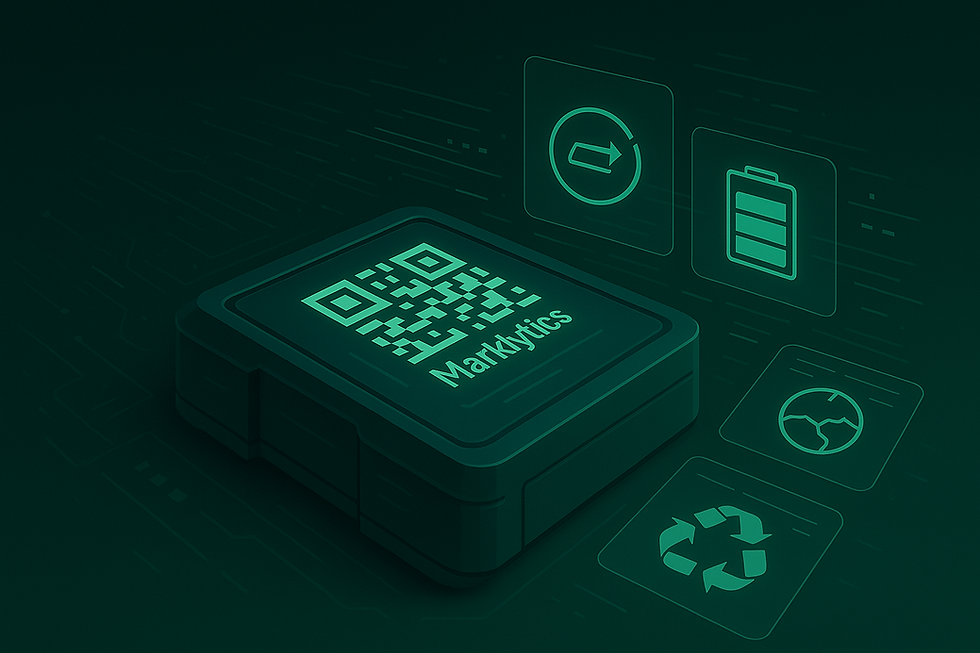
Imagine this: You purchase an electric vehicle battery. Within seconds, you can view where the raw materials were sourced, how the battery was assembled, how much carbon it emitted during production, and how it should be handled at end-of-life. This isn’t science fiction. This is the emerging reality enabled by Digital Product Passports (DPPs).
As global economies transition toward sustainability and circularity, DPPs are becoming the digital backbone of product transparency. And it’s not just about regulation — it’s about trust, intelligence, and future-readiness.

1. The Rise of DPPs
The European Union is leading the charge. By 2027, DPPs will be mandatory for all EV batteries sold in Europe, with textiles and electronics next in line. These digital records will capture and share a product's full lifecycle data — from raw materials to recycling instructions — enabling smarter decisions by manufacturers, regulators, and even consumers.
This shift is about more than compliance. It’s a foundational change in how we understand and manage materials across industries.
2. Why It Matters to OEMs and Suppliers
For OEMs and suppliers, DPPs are both a challenge and a massive opportunity. Managing product data across fragmented systems, spreadsheets, and supply chains is no longer sustainable.
DPPs bring a single source of truth to:
Prove ESG claims with verifiable data
Enable smoother collaboration with partners
Reduce greenwashing risks
Design for reuse and recyclability from the outset
Those who act early won’t just stay compliant — they’ll build trust with regulators and customers alike.
3. The Tech Behind the Shift
DPPs rely on robust technology: structured databases, IoT sensors, blockchain ledgers, and AI-driven analytics. Together, they make it possible to:
Capture accurate product data at every lifecycle stage
Ensure authenticity and traceability
Automate compliance reporting
With the right infrastructure, businesses can transform compliance into a strategic asset.
4. How Marklytics Supports DPP Implementation
At Marklytics, we help OEMs, suppliers, and recyclers:
Build digital IDs for batteries and other regulated products
Ingest and validate real-time data across the supply chain
Integrate ESG metrics into product-level dashboards
Stay aligned with evolving EU and global regulations
We go beyond checkbox compliance. Our tools unlock better decision-making and long-term sustainability.
5. What Comes Next?
DPPs are just the beginning. As they scale, we could see:
Product passports enabling B2B resale markets
Eco-labeling backed by verifiable data
Circular economies built on transparency, not estimates
Companies that embrace DPPs today won’t just survive tomorrow’s regulations — they’ll shape the future of responsible manufacturing.
Will your next product carry a passport? Let’s talk about how Marklytics can help.


Comments